
All electrical / electronic parts generate heat during operation which will affect the control logic; in turn reduces the life time, efficiency and sometimes may cause failure or damage to components which leads to down time or shutdown of production line. The compact panel cooler cools the overheated components by extracting heat generated inside the panel, and prevents outside contaminants.
Four proven approaches to keep your electrical panels at optimal temperature. Click any image to view it larger.
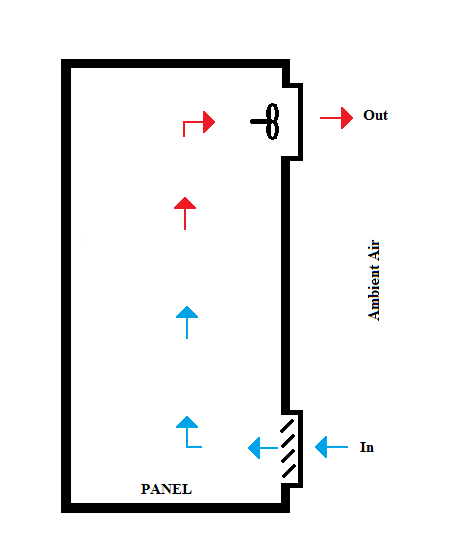
Panels which are having higher temperature than its ambient temperature, cooled by a simple fan & filter units which supply fresh ambient air to the panel.
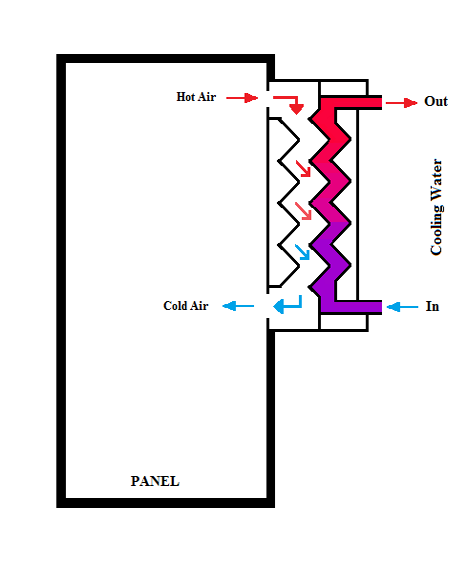
By using cold water in one side of heat exchanger other side panel air is cooled.
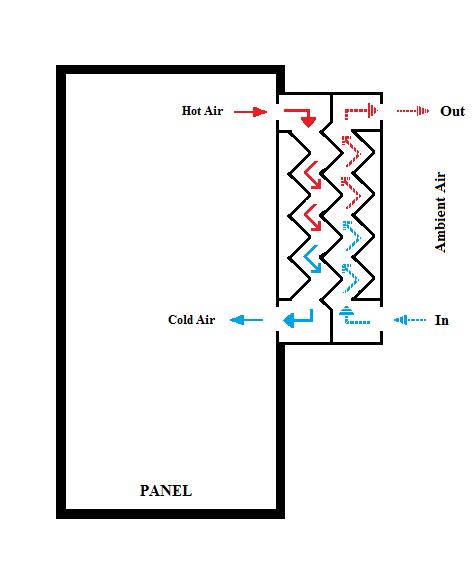
In which panel air and ambient air are separated by a heat exchanger.
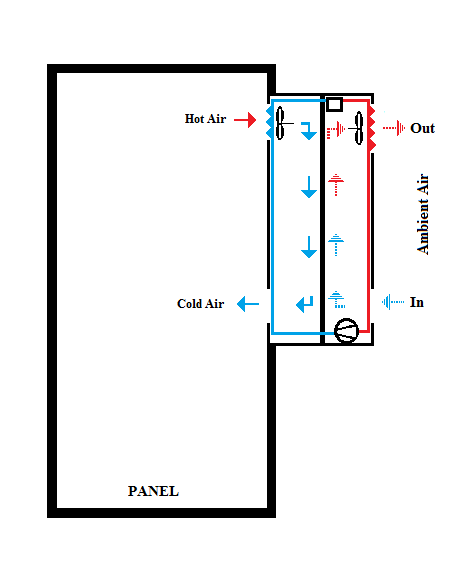
By using air conditioner panel air is cooled and circulated continuously in closed loop.
Panel cooler removes the heat from the panel on continuous basis to give constant temperature for the optimum performance of the equipment.
01The internal air is passed through the cooling coil, which is at a temperature lower than dew point, so that all moisture in the air are condensed and come outside through drain pipe.
02Panel cooler is closed loop in construction, does not allow the cool clean panel air to mix with the hot, humid and dirty outside air.
03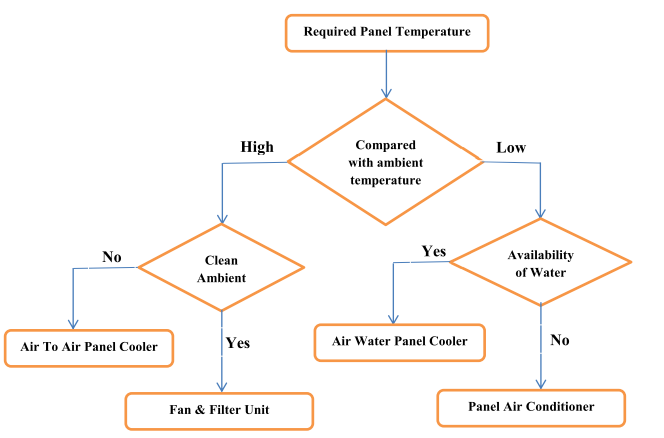
Use the selection chart to identify the right type and capacity of panel cooler for your application. Cross-reference with the heat load calculations below for precise sizing.
The internal load of the enclosure is the amount of waste heat being generated inside the enclosure by electronics or other heat sources. Very often, this load is known and expressed in watts. Since
It is easy to convert one unit to other.
If the enclosure is using a fan or blower to pull outside air into for cooling, the difference in temperature (∆T) between the air entering and exiting the enclosure and the ambient of air is used estimate the internal load.
Another way of estimation heat load is to use information provided by the manufacturer of the electronics that are inside the enclosure. They may often have an estimate of the amount of heat that the equipment is producing.
Talk to our engineering team — we'll help you select the right panel cooling solution for your exact application.